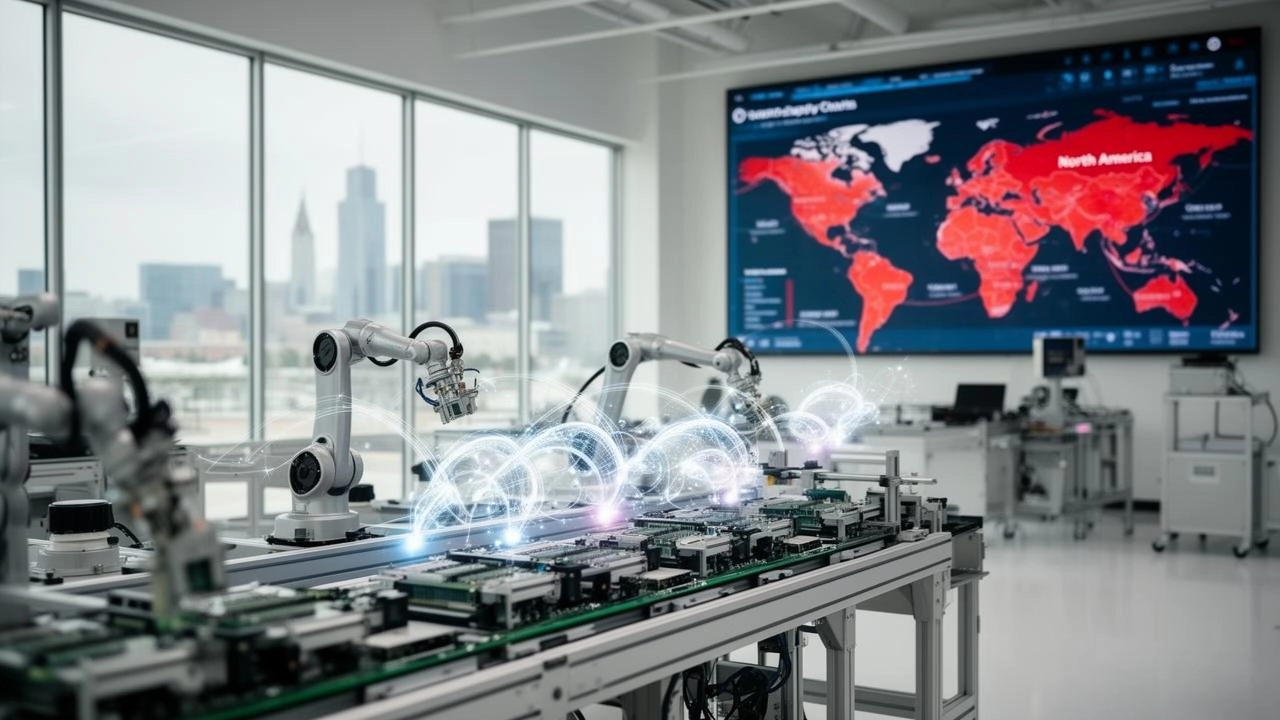
Texas has long been recognized for its strength in energy, manufacturing, logistics, and large-scale infrastructure. A new wave of investment in artificial intelligence is adding another dimension to the state’s industrial economy.
The expansion of AI manufacturing in North Texas illustrates how the technology sector is becoming increasingly connected to traditional industries. New facilities require advanced manufacturing capabilities, skilled workers, energy infrastructure, construction, logistics, and specialized suppliers. As a result, AI growth can create economic opportunities well beyond software development.
The opening of a new advanced manufacturing facility in Fort Worth involving Wistron and NVIDIA is one example of this broader transformation. The facility represents a major investment in AI infrastructure and is designed to manufacture advanced NVIDIA AI systems.
Texas Is Emerging as an AI Manufacturing Hub
AI development is often associated with software companies, cloud platforms, and data centers. However, the physical infrastructure required to operate modern AI systems is becoming equally important.
Advanced AI systems require sophisticated processors, networking equipment, servers, cooling systems, power infrastructure, and manufacturing capabilities. Texas is increasingly participating in these areas as technology companies and manufacturing partners establish new facilities across the state.
The Fort Worth facility demonstrates this shift. Wistron’s new 324,000-square-foot plant is its first U.S. manufacturing facility and is producing NVIDIA Grace Blackwell Ultra systems, with production planned for future NVIDIA Vera Rubin systems as well.
This type of development strengthens Texas’s position in the physical infrastructure supporting the AI economy.
Advanced Manufacturing Is Creating New Business Opportunities
AI manufacturing does not operate in isolation. Large technology facilities require an extensive network of businesses to design, construct, supply, maintain, and operate them.
Construction companies, electrical contractors, equipment manufacturers, logistics providers, engineering firms, technology suppliers, and professional service businesses can all participate in the development of advanced manufacturing infrastructure.
This creates a multiplier effect throughout regional economies. A large manufacturing facility can generate demand for businesses that may never directly manufacture an AI system but provide essential services to the facility and its workforce.
For Texas businesses, the expansion of AI infrastructure therefore represents opportunities across multiple layers of the industrial supply chain.
AI Investment Is Supporting Texas Jobs

The growth of AI manufacturing is also changing the state’s workforce requirements.
The Fort Worth Wistron facility represents a combined $700 million commitment to advanced U.S. manufacturing and has already created more than 500 jobs, with plans to expand employment to approximately 1,000 positions. The project is expected to create opportunities across manufacturing and related fields.
These developments demonstrate that the AI economy requires more than software engineers and data scientists. Manufacturing technicians, electricians, construction professionals, equipment specialists, designers, engineers, and other skilled workers are also important to building and maintaining AI infrastructure.
As more facilities are developed, workforce training and technical education could become increasingly important parts of Texas’s economic development strategy.
Energy Infrastructure Is Becoming More Important
AI infrastructure depends heavily on electricity. Data centers and advanced manufacturing facilities require reliable power, while the broader AI supply chain depends on energy-intensive industrial operations.
Texas’s established energy sector gives the state an important foundation for supporting this growth.
The relationship between energy and AI is likely to become increasingly significant as businesses expand computing infrastructure and manufacturers increase production capacity. Energy companies, utilities, engineering firms, construction contractors, and technology providers may all play roles in meeting this growing demand.
This connection also creates opportunities for innovation in power management, energy storage, grid infrastructure, and efficiency technologies.
AI Manufacturing Is Strengthening Texas Supply Chains
One of the most significant effects of new AI manufacturing facilities could be the development of stronger domestic supply chains.
AI systems require components and services from numerous industries, including semiconductors, electronics, networking, optics, power systems, cooling equipment, and logistics.
NVIDIA has described a broader network of U.S. partners and suppliers spanning semiconductors, boards, systems, racks, optics, and other components. Other Texas projects are also contributing to this ecosystem, including advanced optical manufacturing development in Sherman.
For Texas manufacturers and suppliers, this creates opportunities to participate in one of the fastest-growing technology infrastructure markets.
North Texas Is Becoming an Important Technology Center
Fort Worth and the wider North Texas region have several characteristics that can support advanced industrial development, including transportation infrastructure, a large labor market, established business networks, and proximity to major technology and commercial centers.
The development of AI manufacturing facilities adds another component to the region’s economic profile.
Rather than viewing AI as a separate technology sector, North Texas can increasingly be seen as an ecosystem where technology, manufacturing, logistics, construction, energy, and professional services intersect.
This can make the region attractive to businesses that want to serve the expanding AI infrastructure market.
Digital Technology Is Transforming Manufacturing
The modernization of AI manufacturing also demonstrates how digital technologies are changing traditional industrial processes.
Wistron used a digital twin to simulate its Fort Worth facility before construction was completed. The approach allowed engineers to evaluate factory layouts, production processes, and worker training virtually before the physical facility became operational.
Digital twins, automation, robotics, artificial intelligence, and advanced simulation can help manufacturers improve production efficiency while reducing the risks associated with implementing new facilities and processes.
For Texas manufacturers, these technologies could become increasingly important as competition grows and customers demand faster, more flexible production.
Opportunities Extend Beyond Major Technology Companies
The expansion of AI manufacturing is not limited to multinational technology companies.
Small and mid-sized Texas businesses can potentially benefit by becoming suppliers, contractors, service providers, technology partners, or logistics providers within the larger AI ecosystem.
Businesses that develop capabilities in areas such as industrial automation, electrical systems, equipment maintenance, construction, cybersecurity, transportation, engineering, and specialized manufacturing may find new opportunities as AI infrastructure expands.
This creates a broader economic impact because large industrial investments can support networks of smaller businesses throughout the surrounding region.
Texas’s Industrial Future Is Becoming More Technology Driven
Texas’s traditional industrial strengths provide an important foundation for its growing technology economy.
Energy resources support power-intensive infrastructure, while manufacturing capabilities support production and transportation networks facilitate the movement of equipment and components. These advantages are part of the broader factors behind Texas’s growing importance as a major center for business and industry. Together, they can help Texas compete for projects associated with the next generation of AI infrastructure.
The development of AI manufacturing facilities suggests that the state’s technology growth is moving beyond software and data centers toward physical production.
That shift could have long-term implications for Texas manufacturers, suppliers, contractors, workers, and regional economies.
Conclusion
The expansion of AI manufacturing is helping reshape Texas’s industrial economy. Facilities such as the new Wistron operation in Fort Worth demonstrate how artificial intelligence is creating demand for advanced manufacturing, skilled labor, energy, logistics, construction, and specialized supply chains.
As AI infrastructure continues to expand, Texas is positioned to participate across multiple stages of the industry—from manufacturing and energy to transportation, engineering, technology, and business services.
For companies operating across the state, the growth of AI manufacturing represents more than a technology trend. It is becoming an industrial opportunity capable of creating new markets, strengthening supply chains, and supporting the next phase of Texas’s business economy.
FAQs
Texas combines established manufacturing capabilities, energy infrastructure, transportation networks, available industrial space, and large labor markets. These characteristics can support the development of large-scale AI manufacturing and infrastructure projects.
AI manufacturing can generate demand for construction companies, suppliers, manufacturers, logistics providers, engineers, electricians, technology firms, equipment specialists, and other service businesses. This allows companies outside the technology sector to participate in the expanding AI economy.
AI manufacturing requires a broad range of skills, including engineering, manufacturing, electrical work, construction, equipment operation, logistics, and technology. As more facilities are developed, demand for technical and specialized workers could increase across Texas.